




































Contents:
Industry News
Sponsor Profiles
Show Profiles
Show Directory
Auto Shows of North America (ASNA) is a committee of Automotive Trade Association Executives. The Mission of ASNA is to be the industry resource for auto show information and education, and to provide a network for communication between show executives, manufacturers, other industry affiliates and media.
Red hot Hyundai: new auto show exhibit, new product, new N.A. plant
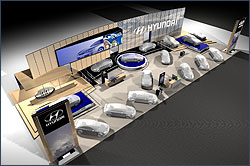
Since the end of last year’s auto show season, Hyundai Motor America has been feverishly planning for a new exhibit to take the floor under the Hyundai logo. Now, as the 2005 season gets underway, the Hyundai “dream team” - headed by Kathy Faith, national manager, corporate promotions, and Patrick McGrath, manager, shows and exhibits - is ready to go.Designed at the L.A. Studio of Exhibit Works Inc., in El Segundo, Calif., the new display premiered recently at the San Antonio Auto Show. The display comes along with the Tucson, Hyundai’s new sport utility vehicle. Unveiled at the 2004 Chicago Auto Show, the Tucson becomes the company’s first all-new product line launch since the Santa Fe’s debut in 2002. Competing with Honda’s CR-V, the Toyota Rav4, and the Mitsubishi Outlander, the Tucson, Hyundai officials say, is just right: “not too small, not too big.”
The vehicle will be available at Hyundai’s 625 dealerships this fall.
|
 |
|
This rendering of Hyundai's brand new auto show exhibit (so brand new, in fact, photography isn't yet available)
demonstrates the company's ongoing commitment to showcasing its products.
|
The structure is composed of furniture grade birch plywood and features both large format graphics and video that support the brand essence of Hyundai and create an engaging atmosphere for the product. The quality and design of the new display is in direct alignment with where Hyundai is headed as a brand, which has been clearly indicated by the numerous accolades and awards Hyundai has been receiving for the quality and value of their vehicles.
The new display is modular in nature and is designed to accommodate shows of varying sizes, as well as scheduling requirements.
And speaking of new property, Hyundai officials are also talking up the site of its first U.S. plant in Montgomery, Ala. Expected to employ some 2,000 local residents, the plant is already handling trial production and will produce the new Sonata, slated for sale in spring 2005.
Hyundai officials say one of its key competitive advantages, “America’s Best Warranty” (10 year/100,000 mile powertrain protection package and 5 year/60,000 mile bumper-to-bumper coverage) is expected to help it increase its market share.

LA dates to be spaced more evenly from other shows
Finally.That may not be exactly what went through the mind of organizers at the Los Angeles Auto Show when plans were solidified for the change in dates that takes effect with the 2007 event.
But close.
"It sounds easy," says Barry Toepke, who handles communications and media relations for the event. "Just change the date. But it was a lot more complicated than that."
Indeed. For a number of years, the thought of attending the show’s media days, typically scheduled right in the middle of the traditional holiday season, wasn't something the average journalist would relish.
And manufacturers, who had to scramble to prepare exhibits for the North American International Auto Show a week after the LA slot weren’t enamored with the timing either.
What organizers didn't want to see was a change that could present just as many problems.
"We needed to secure consistent dates in a timeframe that the industry would want," says Toepke. "The last thing we wanted was to be moving around all over the place on the calendar."
Organizers also wanted to see Los Angeles win its own strategic position on the calendar, with sufficient spacing from other major shows in Frankfurt, Paris, Tokyo, and Geneva, in addition to Detroit.
What did occur was another long, hard look at what it would take to provide the LA Show with a consistent set of dates, a calendar slot that wouldn’t negatively affect other major shows and which would work for the LA Convention Center as well.
In its favor was the fact that the LA Auto Show had, in recent years, become a much bigger event - and therefore somewhat more influential as far as those in the City of Los Angeles were concerned - an important consideration given that the city manages the LA Convention Center.
“Had we tried this five years ago, I don’t think the auto show was in the position to do it,” says Toepke. “We’ve grown since then, both nationally and internationally, and the city sees that it’s not just a consumer show - the city benefits tremendously from the exposure the LA Auto Show provides.”
Once the critical support was in place for a date change, organizers began narrowing the already limited choices down to what ultimately made the most sense - by the 2008 show, the event will close on Thanksgiving weekend, the previous year having already shifted from January to the week following the American holiday.
The date change also benefits the LA Convention Center in that it frees up a date that’s a relatively easy sell. “It’s a good slot for a trade show,” says Toepke. “And it’s not a tough sell to be in LA in January.”
The next challenge was how to communicate the major scheduling change to the auto show community, manufacturers and media included.
Toepke says the strategy was to offer a joint exclusive to two of the most influential media players in the auto show circuit.
“We went to both Automotive News and Paul Eisenstein (at thecarconnection.com) and gave them the information on an exclusive basis,” says Toepke. “They, in turn, contacted manufacturers for comments. By the time we released news of the change (June 22, 2004) there was an overwhelmingly positive feedback and we had a number of favorable articles, including one in the LA Times.”
Reaction to the change from journalists like Dale Jewett, senior automotive writer at Automotive News, was as expected: positive.
“Moving the L.A. auto show to November will be a benefit to both automakers and the public,” says Jewett. “Events at the show will get some more attention, since it won't compete with the Detroit show and all the football bowl games.”
Toepke says the expanded coverage of the date change is likely due to the increased impact the LA Auto Show has on the community. “When you look at how well auto shows do around the country, it’s obvious how an event of this size captures the attention of the public and the media.”
Industry reaction has been extremely positive, says Andy Fuzesi, general manager of the LA Auto Show.
“Executives are thrilled about the move. I immediately began receiving congratulatory messages . . . along with their intentions to take full advantage of the timing.”
With the new dates, the four major U.S. shows will be more evenly spaced; Los Angeles in the fall, followed by Detroit and Chicago in winter, and New York in the spring.
John Hawkins, president of the Greater Los Angeles New Car Dealers Association, says the shift in dates is an important step toward elevating the show’s overall stature.
“Numerous manufacturers have wanted to raise their presence during press days at the show,” but some were deterred by the January dates,” says Hawkins. “The November dates give automakers a much better opportunity to bring more debuts and journalists to Los Angeles.”
Dates set for 2005 Philadelphia International Auto Show
The 2005 Philadelphia International Auto Show has been scheduled for February 5-13, 2005 at the Pennsylvania Convention Center.The Philadelphia International Auto Show is a production of the Automobile Dealers Association of Greater Philadelphia (ADAGP).
For more information about the 2005 Philadelphia International Auto Show, contact the ADAGP at 610.279.5229 or visit
www.phillyautoshow.com.
Portland gets new show director
|
 |
|
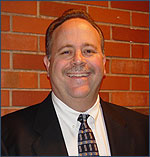
Greg Remensperger
|
Thankfully, those customers would also be his employers, as Remensperger previously sold lubricants to dealers throughout the region.
As the senior executive for the association, Remensperger also takes on the duties of running the Portland International Auto Show, which has a new home in the Oregon Convention Center - and more than a 50 percent increase in available space. Indeed, the event went from a “Class C” to “Class B” auto show and part of Remensperger’s duties will be to help with that transition - bigger displays and more space available for exhibitors.
Remensperger says he’s been looking for ways to make the event - a selling show - work even harder for dealers.
“This is a great association and we’ve got a lot of committed people on our team,” says Remensperger. “With a bigger venue and a steady stream of ideas to work with, we’re excited about the future.”
GM releases details on auto show organization
General Motors has released the latest version of its auto shows and exhibits organization, including a list of regional liaison representatives and auto show contacts.
Bill Ames, director, 313.667.8696.
Joe Meagher, assistant director, 313.667.8562
Support: Marge Carey, 313.665.1359
Cadillac/Hummer: Steve Stanford, 313.665.1664
Chevrolet: Scott Settlemire, 313.667.5613
Support for above: Marge Carey, 313.665.1359
Pontiac/GMC: Grayson Smith, 313.665.1661
Buick/GM Accessories: Angela Kalatzis, 313.665.1662
Saturn/Saab: Greg Bacon, 313.665.6980
Fleet & Commercial: Dave Burch, 313.665.1665
Support for above: Tammie Kapanka, 313.665.1663
Enthusiast events: Heather Waszczenko, 313.665.1951
Support for above: Tammie Kapanka, 313.665.1663
Strategic projects: Denis Mohr (contract), 313.667.2442
Ren Cen exhibits: Ann Martin (contract), 313.667.2443
Regional Liaison Assignments:
Northeast Region: Angela Kalatzis, 313.665.1662
Western, Southeast Region: Steve Stanford, 313.665.1664
South Central Region: Scott Settlemire, 313.667.8613
North Central Region: Grayson Smith, 313.665.1661
All Saturn Field Locations: Greg Bacon, 313.665.6980
Regional Auto Show Contacts:
Northeast Region: Mike Valerio, 914.251.5093
Western Region: Wally Burchfield, 805.373.9642
Southeast Region: John Orth, 678.240.9925
South Central Region: Tom Nowak, 972.541.5448
North Central Region: Jeff Edwards, 630.961.6876
GM Corporate Communications:
Terry Rhadigan, 313.665.3142
Laura Toole, 313.665.1828
Floor Space Issues:
Tim Peters, GM Creative Services, 248.926.2701
Is ASNA on your media list?
When it comes to announcements that affect the auto show community, whether it be a personnel announcement, date change, new show feature or any of a dozen or more reasons to get the word out, ASNA can help.The fact is, the Auto Show Report is just the place to highlight the industry’s key messages.
“It’s one of our mandates to keep the entire auto show community informed about what’s happening around the ASNA network,” says Joe Rohatynski, editor of the Auto Show Report. “Those regular contributions can make a difference in how well we keep each other up to date.”
Items can be e-mailed directly to Rohatynski or reporter J.D. Booth for inclusion in an upcoming newsletter.
On their way: shows being held in days ahead
- California International Auto Show, Anaheim, CA: Wed., Oct. 27 to Sun., Oct. 31.
- Tampa Bay International Auto Show, Tampa, FL: Thurs., Oct. 28 to Sun., Oct. 31.
- Seattle Auto Show, Seattle, WA: Wed., Nov. 3 through Sun., Nov. 7.
- Massachusetts International Auto Show, Worcester, MA: Thurs., Nov. 4 to Sun., Nov. 7.
- Empire State Plaza Auto Show, Albany, NY: Fri., Nov. 5 to Sun., Nov. 7.
- Miami/South Florida Auto Show, Miami, FL: Fri., Nov. 5 through Sun. Nov. 14.
- New England International Auto Show, Boston, MA: Sat., Nov. 6 through Sun., Nov. 14.
- Alabama International Auto Show, Birmingham, AL: Thurs., Nov. 11 through Sun., Nov. 14.
- Sacramento International Auto Show, Sacramento, CA: Sat., Nov. 13 through Tues. Nov. 16.
Mark your calendars …
ATAE/ASNA Winter Meetings; in conjunction with the NADA Convention & Exposition, New Orleans; January 29 – Feb. 1, 2005.
ASNA Summer Meeting; in conjunction with ATAE Annual Meeting, Mohegan Sun (www.mohegansun.com), Uncasville, Conn., July 12 – 13, 2005.
Paragon Group brings flexibility, creativity to auto shows
A custom fit.That’s how Paragon Group Exhibitions & Services approaches the trio of auto shows it produces - the New England International Auto Show, Oregon’s Portland International Auto Show, and the Jacksonville International Car & Truck Show.
And Barbara Pudney, Paragon’s vice president, says it’s a quality that comes from being small enough to adapt, something the organization gained when it was created just three years ago.
That happened when Garry Edgar, who’d worked at Reed Exhibition Companies for 18 years, teamed up with two of his colleagues - five year veteran Pudney included - to buy out Reed’s consumer show business.
A third partner, David Whitmore, who’d been at Reed for 14 years, was also part of the originating team at Paragon.
From the very beginning, Paragon took another view of producing an auto show, a difference that had, in fact, led to the buy-out offer.
"Mainly it centers around the idea that it can take too much time to make a decision, and opportunities can be missed," says Pudney. “We feel that smaller operations can turn on a dime, and when you’re dealing with an auto show that’s typically owned by an association, you want to be able to accommodate opportunities quickly. You want to be able to customize the event based on the association’s objectives. Auto shows are very fluid that way.”
For Paragon, the flexibility comes in the form of being able to adapt to an association’s changing requirements, not being locked into a set amount for different budget areas.
“For example, when we were with the larger firm, we had very little flexibility in what could be spent in a particular category,” says Pudney. “Here, we can shift dollars into one area from another if the need is there. Again, the key is flexibility.”
Another key word for Pudney and her team is “creativity.”
“We’re always trying to make each year’s show new and fresh for the audience,” she says. “We ask ourselves ‘why would people want to come back’ and we try to give them a compelling reason to do so. We want to keep the momentum going.”
|
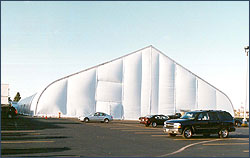 |
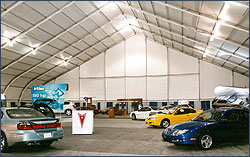
| No space? Paragon addresses the problem at the New England International Auto Show with a movable structure that's set up and taken down to coincide with the event. | |
|
 |
And in Jacksonville, Paragon is teaming up with the local association to build programs around a teen safe driving initiative.
Plans for next spring’s event include a drunk driving simulator and a speed course in the parking lot that educates young drivers on the use of anti-lock brakes.
“The important thing is to make the issue relevant to people,” says Pudney, who is working with law enforcement officials in Florida in developing the auto show program.
“This is all built around what the association is looking to do around the issue of teen driving,” says Pudney. “Our job is to figure out how to make it relevant and cost effective.”
Pudney says the measure of success for Paragon includes both driving attendance and the sale of exhibit space. And she’s smiling about both.
“We’ve been very fortunate every year in each of the shows we do.”
The ongoing challenge, she says, is coming up with ways to maximize the space available in a particular venue, not an easy task when the “sold out” sign is nearly everywhere.
“It’s about increasing space when you don’t have space,” says Pudney.
At the Bayside Expo Center in Boston, that’s meant installing a 40,000 square foot Sprung structure that’s temporarily attached to the existing building. “It goes up a week before a show and down again as soon as it’s over.”
And in Jacksonville, where the weather is generally not a problem - at least when hurricanes aren’t in fashion - a relatively simple tent structure gives the auto show the additional space flexibility it needs.
Again, it’s flexibility that drives the agenda, says Pudney.
“In Portland, an expanded building meant we could bring motorcycles into the mix of vehicles,” she adds. “We ended up putting in a motorcycle stunt show to enhance that showcase. Next year, it could be something else. It’s always about looking for something new.”
Radio Broadcast Services turns remote challenge into 'no worry'
Eric Granowicz has a sure-fire way to generate even more media attention during an auto show: Go remote. As in radio remote.
|
 |
|
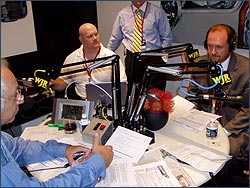
Radio Broadcast Services’ Eric Granowicz (white shirt) monitors an interview on WJR radio’s “The Paul W. Smith Show” from the Paris International Motor Show. Smith, left, was interviewing Don Whitsitt, senior vice president, Aisin Seiki Co., right, following a company press conference. Granowicz coordinates remote radio broadcasts from auto shows around the world.
|
One of those, the North American International Auto Show, has Granowicz setting up a row of hookups that can be used by any of the bevy of radio stations wanting to do remote broadcasts from the auto show floor.
And, for the stations, it’s an ideal situation, Granowicz says.
“Without these services, a radio station would provide their own technician and set up the ISDN lines and other connections necessary to do the broadcast,” he says. “They want to do that, but it’s a huge cost thing, with telephone lines, personnel, and parking. If you’re looking at a week long event, or more, that’s often cost prohibitive.”
With Radio Broadcast Services all technical aspects are handled for any number of radio stations wanting to be on the show floor. But the services may be of even greater benefit to the auto show organizers themselves.
“Auto shows typically don’t have a lot of control over what radio stations do,” says Granowicz. That can translate into a cacophony of stations – the “radio wars” he says can result from ever-increasing volume heard on the floor among broadcast competitors.
“We’re able to control that volume so there isn’t a runaway situation.”
But Radio Broadcast Services does more than keep tabs on the volume level. With a keen understanding of industry requirements and the technical knowledge and expertise at hand, Granowicz and the teams he assembles make sure everything a radio station needs to have a high-quality remote broadcast is ready before it goes on the air.
Even aside from the ability to manage a “broadcast row” effectively, there’s another underlying benefit to an auto show. Radio Broadcast Services simplifies the situation.
There’s also an opportunity to generate additional revenue through sponsorships, something shows have done in conjunction with Granowicz’ services.
Radio Broadcast Services has made its “connections” throughout the world, and annually produces shows at motor shows in Detroit,
Geneva, Tokyo, London, Frankfurt and Paris, from where Granowicz just returned with WJR’s “The Paul W. Smith Show.” Beyond auto
shows, Radio Broadcast Services also includes night clubs as clients that want to connect with certain radio stations,
and more importantly, listeners of those stations.
Albany group juggles (quite nicely, thank you) two events
Two shows in one year?How about every year?
For Deborah Dorman, president of the Eastern New York Coalition of Automotive Retailers, it’s a stark reality that’s born out of necessity, not desire.
|
 |
|
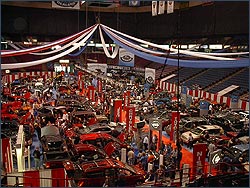
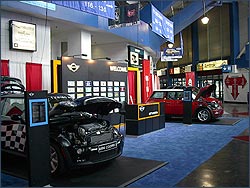
It might seem to be a tight fit, but crowds are what an auto show is all about-and the spring event in Albany is no exception.
|
What Albany does have is two “very different” shows, bookends, really: one in the spring, another in the fall. The first, the Albany Auto Show, is held in a local sports arena.
“It’s a smaller version of anyone else’s auto show,” says Dorman, an attorney by training who’s been at the helm of ENYCAR for 11 years; her show manager, Kim Quinn, for 15.
The compressed space of less than 50,000 square feet has ENYCAR organizers armed with rulers, at least figuratively speaking.
“We use every possible square inch of the facility that we can,” says Dorman.
On the positive side, the two-floor configuration allows vehicles to be moved in through a connected parking garage. But it’s the exhibits that can present a greater challenge than vehicle placement. Because not all displays require the same type of space, Dorman and her team must deal with limitations regarding what types of exhibits can be set up and where.
|
 |
|
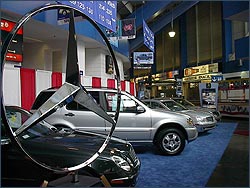
Albany's spring show, one of two events available to area residents, features the best and brightest from a variety of manufacturers.
|
What the Albany Auto Show does have is the ability to introduce some entertainment features at the show, and the event includes a fundraising “Race for Kids” that operates under the Children’s Miracle Network banner. And local broadcasters actively support the event through a NASCAR simulator racing challenge.
Then there’s the fall show.
“It’s an entirely different story,” says Dorman, referring to the Empire State Plaza Auto Show, which is held in an office building concourse. For starters, the fall event doesn’t have an admission price, given the public access associated with a state office building.
There’s also significant limitations associated with the fall show, including a prohibition on forklift trucks, plus imposed restrictions on the distance from art work on the wall.
And, yes, 9/11 security changes have had an impact as well.
“We lost space for security measures,” says Dorman, noting that an entire large exhibit hallway was taken away as a result. The severe space restrictions also mean there’s not much more than the cars themselves. Which means no entertainment.
What is working, and working well, Dorman says, is how public interest in vehicles benefits dealers and their salespeople.
“In the spring, people who pay to attend the show are certainly there for more of a fun time, but they’re also more serious about looking at cars. In the fall, on the other hand, they may come partly because it’s free, but also because the weather brings them indoors,” notes Dorman.
But in either case, salespeople have taken to one show or the other as a way of generating leads, which often keeps those who know how to work a show properly busy for months.
|
 |
|
With less than 50,000 square feet of exhibit space available, the spring Albany show is a testament to the organization skills of its dealer association.
|
“When we did the market research, we found it wasn’t the same people coming to both shows,” says Dorman. “We really are reaching two different audiences.”
That audience difference is also highlighted by the fact that different vehicles are typically shown at each show, a factor resulting from model introductions that are now spread over the year.
Still, no one is about to believe Deborah Dorman won’t be celebrating the day a convention center is announced for Albany.
“We’re happily moving toward the day when one is built,” she says. “If I can get an auto show in there, I think I’ll be able to retire.”
Profile: Albany Auto Show & Empire State Plaza Auto ShowDate:Apr. 2-4, 2004 (Albany); Nov. 5-7, 2004 (Empire State Plaza)
Place:
Exhibit Space:
Tickets:
Show Hours:
Show Contact:
Show Website: |
Buffalo show reaches out to 'next generation'
Cool city. Hot cars.For the Buffalo Auto Show, it’s a theme that’s resonating with show goers, especially in connection with a move by the show’s executive director, Paul Stasiak, to reach an audience that might not be the average auto show attendee.
Stasiak calls it “Autofest” and last year marked a first go at an event designed to do just that - using fashion, music, along with high-energy “tricked out” cars to capture the attention of a new audience.
“It was a youthful fashion show,” notes Stasiak, who is also president of the Niagara Frontier Automobile Dealers Association.
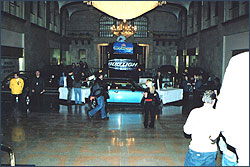
Held adjacent to the Buffalo Convention Center, auto show attendees could take advantage of any number of Autofest events, including bands from the area’s top clubs, high-energy DJs and two nights of concerts in addition to the “Fast-Lane Fashion Event.”
|
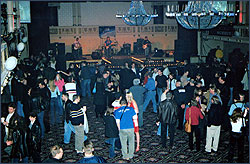 |
| Not your average auto show event? Buffalo organizers say that's exactly the point as they seek to position Autofest as a way to reach the next generation of buyers. | |
|
 |
“We had a very positive reaction to last year’s inaugural event,” says Stasiak. “There was good reaction from everyone, including the city, and it captured the attention of the local dance and night clubs as well.”
The attraction also piqued the curiosity of the public, even those who weren’t necessarily interested in Autofest itself.
In addition to the Autofest initiative, the Buffalo Auto Show employed tried-and true marketing, including a car giveaway that featured a Ford Mustang in a partnership with a local radio station.
Another new introduction was a “Wellness Lane” with blood pressure checks and information on health-related issue, all with a “car tuned, body tuned” theme that saw the Buffalo Auto Show partner with a local health care provider.
The show also highlighted efforts by the dealership association to attract an upcoming generation of auto technicians with a student appreciation day underscoring that emphasis.
“We dedicated the second day of the show to students in the high school auto tech area,” notes Stasiak. Highlights included free admission to the show for students, instructors and other school officials, plus presentations about auto tech opportunities in the western New York area.
|
 |
|
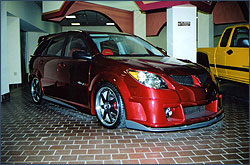
Then again, it is about the cars, especially those that appeal to that generation of buyers the Autofest event is targeting.
|
The auto show also featured a “Beauty Detail Shop,” a partnership with the local Miss Buffalo pageant and Mary Kay cosmetics that gave show goers, or those attending with other attendees, an opportunity to take a breather.
For its part, the Buffalo Auto Show was able to help generate support for local Miss America and Miss Buffalo scholarship programs.
Stasiak says a number of other highlights all served to bring the Buffalo Auto Show to new heights of interest among attendees, many of which were captured on local TV stations.
One highlight included the assembly of a vehicle motor by volunteers from the local GM engine plant, an initiative that helps cement the relationship with the labor community while show goers watched a vehicle power plant come to life over a 20 minute period.
“It was pretty slick,” says Stasiak.
Profile: Buffalo Auto ShowDate:March 3-7, 2004
Place:
Exhibit Space:
Tickets:
Show Hours:
Show Contact:
Show Website: |
Edmonton: families can have a great time here
For the Edmonton Motor Show, the last three years have seen quite a growth spurt with efforts to broaden the appeal of the event and resulting in a near doubling of attendance.
|
 |
|
Bob Vilas
|
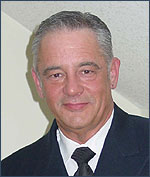
“We revamped the event in 2001 and 2002,” says Vilas, who previously worked as a special events coordinator for an advertising agency in Western Canada. “We wanted to make it a more interactive show, something that would make it more of a family destination.”
One new addition that is being credited with a boost in attendance is a section focused on motorsports, including such features as a pit stop challenge.
How fast can you change a tire?
Auto show attendees discover the answer to that question after competing for a day’s special prize.
The area also includes a replica racetrack with 1/10th scale cars, the public competing for a trip to the popular Molson Indy race held in Toronto.
|
 |
|
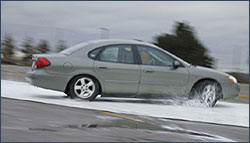
Show goers at the Edmonton Motor Show got a chance to learn how to navigate on potentially hazardous winter roads.
|
Ah yes, the weather.
Think Alberta and February and the idea of weather playing havoc with attendance quite likely comes to mind.
In reality, the sponsoring Edmonton Motor Dealers Association has figured out how weather can actually work for the event.
|
 |
|
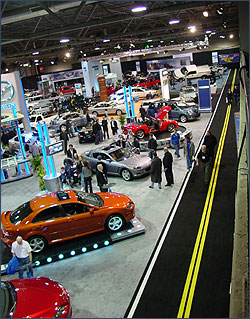
It may be cool in Edmonton in February, but the Edmonton Motor Show is one hot place to be as growing numbers of attendees can attest.
|
Promoting the event includes teaming up with one of the most popular venues going, not only in Western Canada but beyond.
Knowing that some 22,000 people a day visit the West Edmonton Mall, Vilas set out to partner with the popular shopping destination, which includes a large indoor theme park, and even a skating rink used by the NHL’s Edmonton Oilers for practice sessions.
Initiatives with the mall include advance ticket sales and the sponsoring of a series of car giveaways plus autograph sessions with the Oilers in association with Ford, which has an existing sponsorship relationship with the popular team. And specialty retailers at the West Edmonton Mall came to the show with interactive racing games, another crowd pleaser.
|
 |
|
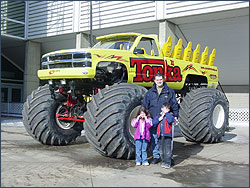
What kid could resist a ride on a 12-seat monster truck at the Edmonton show.
|
The Edmonton Motor Show’s successful growth can also be credited to an emphasis on the sales of family passes - up from 500 four years ago to some 9,000 sold for last year’s show.
“We’re doing everything we can to communicate that this is a family destination,” says Vilas. “Families can have a great time here. That’s a key message.”
Vilas has also put his time into aspects of the event’s management that aren’t necessarily evident on the show floor. Specifically, Edmonton has become a paperless organization as far as show space bookings, with all contractor invoicing and ordering of exhibit materials now done strictly through a secured Web site.
“We realized today that most of the contacts that we have use a laptop and travel the auto show circuit,” says Vilas. “It’s saved us a lot of money doing it this way and it’s a much faster way of booking space and materials.”
Profile: Edmonton Motor ShowDate:Feb. 26-29, 2004
Place:
Exhibit Space:
Tickets:
Show Hours:
Show Contact:
Discount Coupons:
Show Website: |
More space helps Houston show keep improving
Better and better.For Walter Wainwright and the Houston Auto Show, improvements that have come from a new venue and addition of another day are bringing renewed energy to the show floor, even as attendees have made the event a “must do” on their calendars.
“We’ve been doing this for 20 years and people have come to look forward to it,” notes Wainwright.
At the same time, a move three years ago to larger space has been a welcome one.
|
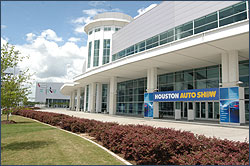 |
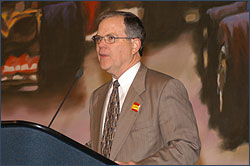
| A move to the Reliant Center (above) has been a welcome one for auto show organizer Walter Wainwright (below). | |
|
 |
“We’ve seen manufacturers upgrade their exhibits considerably.”
Even so, Wainwright acknowledges that most attendees aren’t coming for the displays, but the vehicles themselves.
“We’ve had an excellent selection of new cars,” he says, “including more sneak preview and concept vehicles than we’ve ever had before.”
A good part of the excitement is being generated by media coverage, adds Wainwright.
“We continue to have a very positive image in Houston,” he says, pointing to some 25 to 30 media remotes, either live or rebroadcast.
Print coverage in the Houston Chronicle is also strong, says Wainwright.
“All in all, Houstonians know when the auto show is headed this way,” he says. “It invokes some pretty positive feelings, especially among those who are in the market for a vehicle.”
While the Houston Auto Show isn’t a selling event, it does whet the appetite of a buying public, says Wainwright, especially when many of the vehicles shown will be in showrooms in the near future.
“We had nearly 30 production vehicles that fall into that category,” he says. “Plus we had an exceptionally large number of concept vehicles.”
In addition to the vehicles, Wainwright says Houston introduced a Kids Fun Zone, coordinated with two local organizations – Backyard Adventures and Kidventure Camps.
The weekend event included a rock climbing wall, obstacle course, slot car racing, giant slide, tree house, swing sets, as well as face painting and temporary tattoos, all designed to generate additional excitement among the “next generation” of car buyers.
|
 |
|
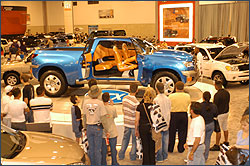
While displays help auto manufacturers promote their vehicles, it is those cars and trucks that capture the imagination of show goers in Houston.
|
“We featured the efforts of the Automotive Youth Education System and also held a sales academy at the Reliant Center,” says Wainwright.
The Houston Auto Show also included a gala preview night, with proceed benefiting the association’s scholarship program.
“We use the show like I’m sure a lot of associations do,” says Wainwright. “There are a lot of satellite type functions at the show, and the Reliant Center gives us the flexibility to do that.”
Profile: Houston Auto ShowDate:Apr. 2-11, 2004
Place:
Exhibit Space:
Tickets:
Show Hours:
Show Contact:
Show Website: |
'Showcase' environment gives Rochester distinction
From the perspective of John Lyboldt the key factor that characterizes the Rochester International Auto Show is the most obvious.“It’s the building that makes the show what it is,” says Lyboldt, president of the Rochester (NY) Automobile Dealers’ Association, referring to the Rochester Riverside Convention Center and its spectacular view of the Genesee River.
|
 |
|
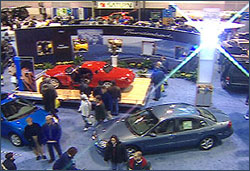
Vehicles everywhere, but lots of visibility. That's a hallmark of the Rochester Auto Show.
|
Indeed, Lyboldt says coming up with a workable show plan is a major proposition - and something that once set in place is maintained in a way that gives the overall look a sense of balance in combination and colors.
There’s also an effort to maximize the effect of concept vehicles, which is an increasingly popular draw. For Lyboldt, show goers are becoming sensitized to the manufacturers’ tendency to actually take to market vehicles that they once offered as concepts but never made. Now, there is more likelihood of a concept vehicle making it to a dealer’s showroom.
“That’s what happened with the Chrysler Crossfire. And the Ford Thunderbird. And the Dodge Viper,” recalls Lyboldt. The result, he says, is more anticipation on the part of the public.
“They know now that what they’re seeing is a true preview of what’s coming,” says Lyboldt, who sees other reasons as well for a steady increase in attendance (up four percent last year, echoing a trend for the last number of years).
|
 |
|
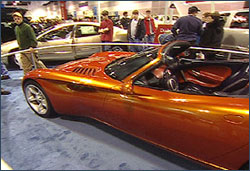
Creating an environment where vehicle shoppers can do their comparisons in comfort is something that's important to Rochester Auto Show organizers.
|
“They can have any question they might have answered at the auto show.”
Lyboldt says the Rochester show has also been able to create an environment where vehicle shoppers can do their comparisons in comfort.
“Our message is: ‘come to the show, relax, enjoy it, and learn about what you’re looking at and compare the models.’”
From a practical standpoint, the Rochester show has incorporated an attractive one-piece carpet and made the two-floor event as comfortable as possible for consumers.
Organizers are also incorporating (in the upcoming show) something many other events won’t have: motorcycles.
Largely because the Rochester Automobile Dealers’ Association includes the two-wheeled variety of vehicle in its roster, the show plans to include a Motorcycle Alley, something that Lyboldt says just makes good sense.
“Car buyers are also motorcycle buyers,” he notes. “And we’ve been able to make room by using space that was previously used to store exhibit crates during the show.”
Additional special attractions in place at the most recent show include a fully restored Mercedes Gull Wing, owned by a local company which effectively uses the classic vehicle as a “spokes model” for its work.
There’s also the traditional (for Rochester at least) NASCAR exhibits to see, featuring vehicles from the Busch series.
Lyboldt says the attractions are rounded out with something yellow and square: the ever-popular Sponge Bob Square Pants.
“We had all the popular characters wandering about, plus face painting for the kids,” he says. “It’s something we do to mix it up, making it a family event.”
Yet another “set apart” aspect to the Rochester show (although not unique among other venues) is the fact that deals are made on the show floor. Or almost made.
|
 |
|
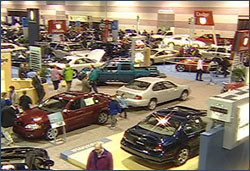
Attendees find the Rochester Auto Show a comfortable place to look for their next vehicle.
|
The practical visual effect, then, is the possibility of one or more “SOLD” tags on vehicles being displayed, although deals aren’t actually negotiated on the auto show floor.
There’s also a local emphasis on showcasing the dealer association’s automotive training initiatives, all with a view to encouraging the next generation to consider a career at a dealership and employing volunteer help in the process.
“We provide job descriptions as well as other information,” says Lyboldt. “People who are interested get a good feel for what it’s like to work in the industry and we’re seeing a strong interest there.”
Indeed, the dealers association has seen just over 5,000 people be trained in the last few years.
“We’re seeing people research the industry,” says Lyboldt. “These are people who once thought it was just about selling cars and turning wrenches. They’re finding it’s a lot more than that.”
Profile: Greater Rochester Auto ShowDate:Feb. 5-7, 2004
Place:
Exhibit Space:
Tickets:
Show Hours:
Show Contact:
Show Website: |
Even ice storm couldn't stop St. Louis show
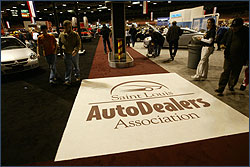
Weather. It’s the one variable that can keep auto show organizers in some parts of the North American continent up at night, wondering what impact nature might have on attendance.So when an ice storm hit St. Louis on the last day of the January event, David Crafton, executive director of the St. Louis Auto Dealers Association, couldn’t help but hold his breath.
|
 |
|
Rolling out the carpet: despite an ice storm on the last day of the St. Louis event, attendees were more than happy to get their annual auto show fix.
|
“We netted down only slightly,” says Crafton, referring to the show’s overall attendance figures.
The largest annual consumer show in the St. Louis region, the auto show is clearly a key event for those die-hard attendees, even with the weather aside. Plus, a vehicle giveaway - a Dodge Durango - helped to generate interest, says Crafton.
“It was a very popular initiative,” says Crafton. “We’re going to be doing more of that in the future.” Crafton says promoting the show is done through a combination of print and broadcast advertising, although with some variability built in to the mix.
|
 |
|
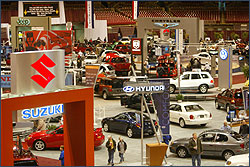
Field of dreams? Exhibitors from every part of the world showcase vehicle offerings in the Show Me state.
|
While the auto show itself isn’t “themed,” Crafton says the calendar is one of the event’s best selling points.
“It’s timed very well, the off-week between the NFL championship game and the Super Bowl,” he says. “It’s too cold to golf and there’s no boating, so people have the opportunity to do something. That timing is part of our positioning.”
Even with the Sunday ice storm, people had an incentive to come to the show: that Durango giveaway.
“The weather wasn’t going to be a factor if they won,” says Crafton. And on the subject of winning, auto show organizers are sometimes up against another unknown factor: whether the beloved St. Louis Rams football team goes on to compete at the end of its season.
“If they win and play the championship game, it cuts into the time we have to set up our show,” says Crafton, “though future shows and new attractions are likely to generate almost as much excitement as the winning Rams.”
Profile: St. Louis Auto ShowDate:Jan. 21-25, 2004
Place:
Exhibit Space:
Tickets:
Show Hours:
Show Contact:
Show Website: |
Vancouver eyes improvements ahead for show
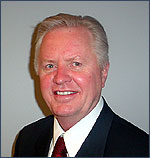
Get set, Vancouver, for a “new and improved” auto show experience.That’s what’s in store for the Pacific International Auto Show, says Glen Ringdal, president of the sponsoring New Car Dealers Association of British Columbia.
|
 |
|
Glen Ringdal
|
Achieving that goal will mean implementing a series of marketing initiatives, starting with the most basic - the tickets.
“We haven’t yet marketed tickets outside the traditional outlets of Ticketmaster and at the door,” says Ringdal. “We need to reach out with new ticketing initiatives, especially through outside retailers.”
While the show has been able to leverage a considerable advertising budget to take advantage of media promotions, Ringdal says he wants to see more partnerships develop, not only with manufacturers but with related suppliers as well.
But can the show handle such an aggressive increase in its attendance numbers?
“Absolutely,” says Ringdal emphatically, pointing to a number of times when the show floor could handle the additional traffic.
|
 |
|
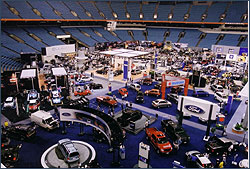
Sporty: Every year the Pacific International Auto Show transforms B.C. Place (also a sports facility) into a showcase for the latest vehicle offerings.
|
“We have a fairly strong design and clothing manufacturer base here,” he says. “We see a real synergy between the evolving fashion of cars and clothes.”
Indeed, bringing that fashion element to the auto show is what Ringdal believes will jumpstart the event.
“We’re already meeting with leaders of the fashion industry,” he says. “We’re putting together ideas and ways to make this work.”
Ringdal envisions a scenario where couples might find the appeal of fashion and cars something each person would want to see - with the result being an increase in interest and attendance.
While Ringdal sees a growing Pacific International Auto Show, it’s not to say the event hasn’t already experienced success. He’d just like to see more.
|
 |
|
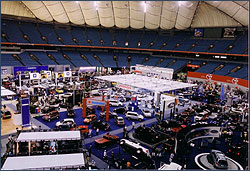
A "comfortable" event, the Pacific International Auto Show is poised to grow in the years ahead.
|
“We’ve been developing things in this direction, but we’ve reached a zenith,” says Ringdal. Future initiatives he has in mind include providing family-oriented attractions that will gain new interest, but not take up space.
“We’re sold out and we could easily use another 100,000 square feet,” he says. “The challenge: we’ll have to be more efficient, and look for activities that don’t take up space, but have market appeal,” he says.
Profile: Pacific International Auto ShowDate:Mar. 26-Apr. 4, 2004
Place:
Exhibit Space:
Tickets:
Show Hours:
Show Contact:
Show Website: |
Auto Shows of North America Show Directory
AlbanyAlbany Auto Show
April 8-10, 2005
Empire State Plaza Auto Show
Nov. 5-7, 2004
Anaheim
California International Auto Show
Oct. 27-31, 2004
Atlanta
Atlanta International Auto Show
April 9-17, 2005
Austin
Austin American Statesman Auto Show
Dec. 9-12, 2004
Baltimore
Baltimore International Auto Show
Feb. 10-13, 2005
Birmingham
Alabama International Auto Show
Nov. 11-14, 2004
Bethlehem
Greater Lehigh Valley Auto Show
Mar. 30-Apr. 3, 2005
Boston
New England International Auto Show
Nov. 6-11, 2004
Buffalo
Buffalo Auto Show
Feb. 9-13, 2005
Calgary
Calgary International Auto Show
Mar. 9-13, 2005
Charlotte
Charlotte International Auto Show
Nov. 18-21, 2004
Charleston
West Virginia International Auto Show
Jan. 21-23, 2005
Chicago
Chicago Auto Show
Feb. 11-20, 2005
Cincinnati
Cincinnati Enquirer/Post Auto Expo
Feb. 16-20, 2005
Cleveland
Greater Cleveland International Auto Show
Mar. 2-6, 2005
Columbus
Columbus International Auto Show
Mar. 11-20, 2005
Dallas
Dallas Auto Show
Sept. 24-Oct. 17, 2004
Davenport
Iowa/Illinois Regional Auto Show
Feb. 11-13, 2005
Dayton
Dayton Auto Show
Mar. 30-Apr. 3, 2005
Denver
Denver Auto Show
Mar. 30-Apr. 3, 2005
Detroit
North American International Auto Show
Jan. 9-23, 2005
Edmonton
Edmonton Motor Show
Feb. 3-6, 2005
Fort Worth
Greater Tarrant County Auto Show
Feb. 24-27, 2005
Greenville
South Carolina International Auto Show
Jan. 21-23, 2005
Harrisburg
Pennsylvania Auto and Boat Show
Jan. 26-30, 2005
Hartford
Connecticut International Auto Show
Nov. 18-21, 2004
Houston
Houston Auto Show
Jan. 28-Feb. 6, 2005
Honolulu
First Hawaiian International Auto Show
Mar. 31-Apr. 3, 2005
Indianapolis
Indianapolis Auto Show
Dec. 27, 2004-Jan. 2, 2005
Kansas City
Greater Kansas City International Auto Show
Mar. 3-6, 2005
Las Vegas
Las Vegas International Auto Show
Nov. 26-28, 2004
Louisville
Louisville New Car Show
Apr. 8-10, 2005
Los Angeles
Greater L.A. Auto Show
Jan. 7-16, 2005
Miami
South Florida International Auto Show
Nov. 5-14, 2004
Milwaukee
Greater Milwaukee Auto Show
Feb. 26-Mar. 6, 2005
Minneapolis/St. Paul
Greater Minneapolis and St. Paul International Auto Show
Mar. 12-20, 2005
Montreal
Montreal International Auto Show
Jan. 14-23, 2005
New Orleans
New Orleans International Auto Show
Mar. 3-6, 2005
New York
New York International Auto Show
Mar. 25-Apr. 3, 2005
Oklahoma City
Oklahoma State Fair Auto Show
Oklahoma City International Auto Show
Mar. 10-13, 2005
Orlando
Central Florida International Auto Show
Nov. 24-28, 2004
Philadelphia
Philadelphia International Auto Show
Feb. 5-13, 2005
Phoenix
Arizona International Auto Show
Nov. 25-28, 2004
Pittsburgh
Pittsburgh International Auto Show
Feb. 12-20, 2005
Portland
Portland International Auto Show
Jan. 27-30, 2005
Rhode Island
Northeast International Auto Show
Jan. 27-30, 2005
Richmond
Virginia International Auto Show
Jan. 14-16, 2005
Rochester
Rochester International Auto Show
Mar. 2-6, 2005
Sacramento
Sacramento International Auto Show
Nov. 13-16, 2004
Saint Louis
Saint Louis Auto Show
Feb. 2-6, 2005
Salt Lake City
Utah International Auto Expo
Jan. 14-17, 2005
San Antonio
San Antonio Auto Show
Sept. 30-Oct. 3, 2004
San Diego
San Diego International Auto Show
Dec. 29, 2004-Jan. 2, 2005
San Jose
San Jose International Auto Show
Jan. 5-9, 2005
Seattle
Seattle International Auto Show
Nov. 3-7, 2004
Spokane
Spokane International Auto Show
Feb. 11-13, 2005
Tampa
Tampa Bay International Auto Show
Oct. 28-31, 2004
Toledo
Greater Toledo Auto Show
Feb. 3-6, 2005
Toronto
Canadian International Auto Show
Feb. 18-27, 2005
Tulsa
Tulsa Auto Show
Mar. 17-20, 2005
Vancouver
Pacific International Auto Show
April 1-10, 2005
Washington, D.C.
Washington Auto Show
Dec. 26, 2004-Jan. 2, 2005
Credits/Contacts:
Automotive Trade Association Executives8400 Westpark Drive
McLean, VA 22102
703.821.7072
703.556.8581 - fax
www.info@atae.info
Don McNeeley, ATAE President
donmc@cjnetworks.com
Jennifer Lindsey, ATAE Executive Director
jlindsey@nada.org
Rod Alberts, ASNA Chairman
ralberts@dada.org
The Auto Show Report
Joe Rohatynski, editor
joe@joepr.com
J.D. Booth, staff reporter
jd@jdbooth.com
Elizabeth Katz, staff reporter
llpa@sbcglobal.net